Sale 1693
| Philadelphia
| Philadelphia
Estimate$20,000 – $30,000
This lot is included in the archives of Richard Riss, under number 321.
Lot Essay:
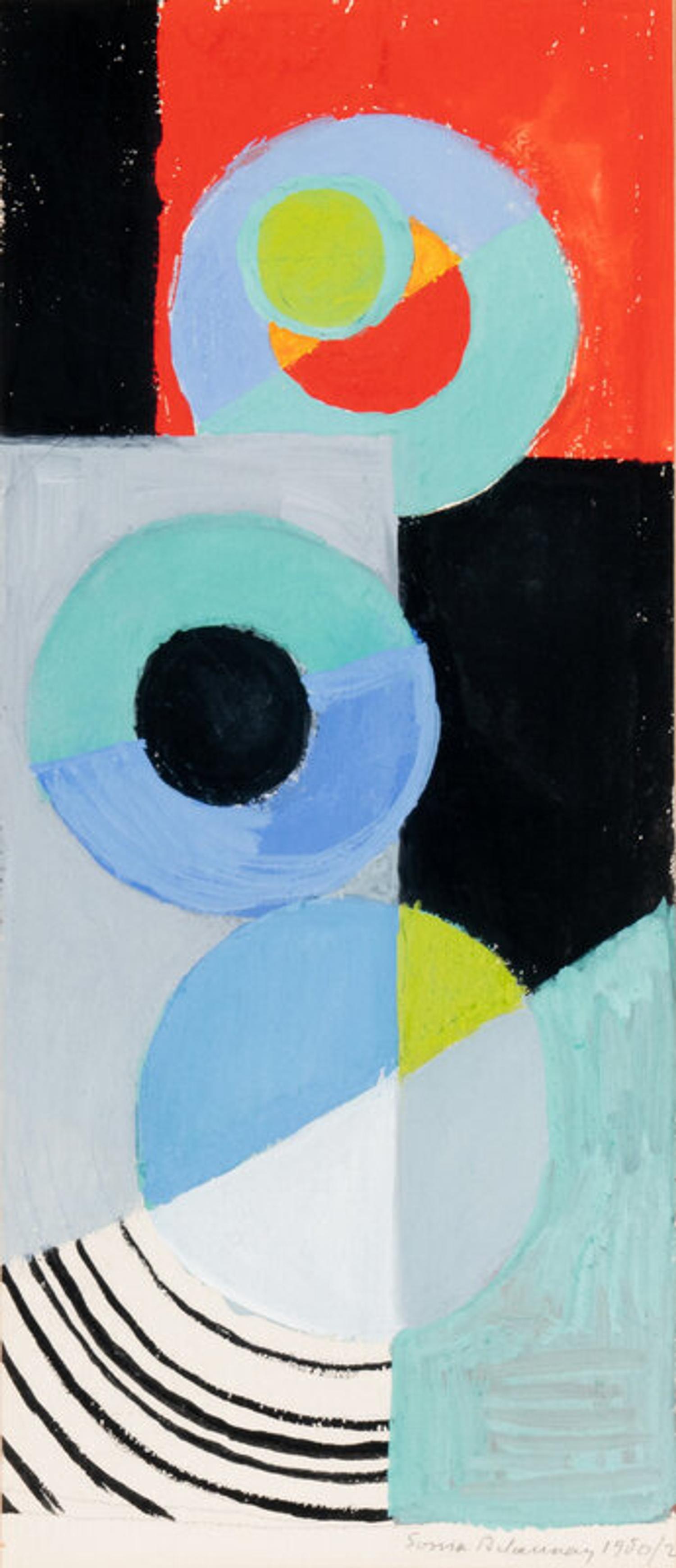
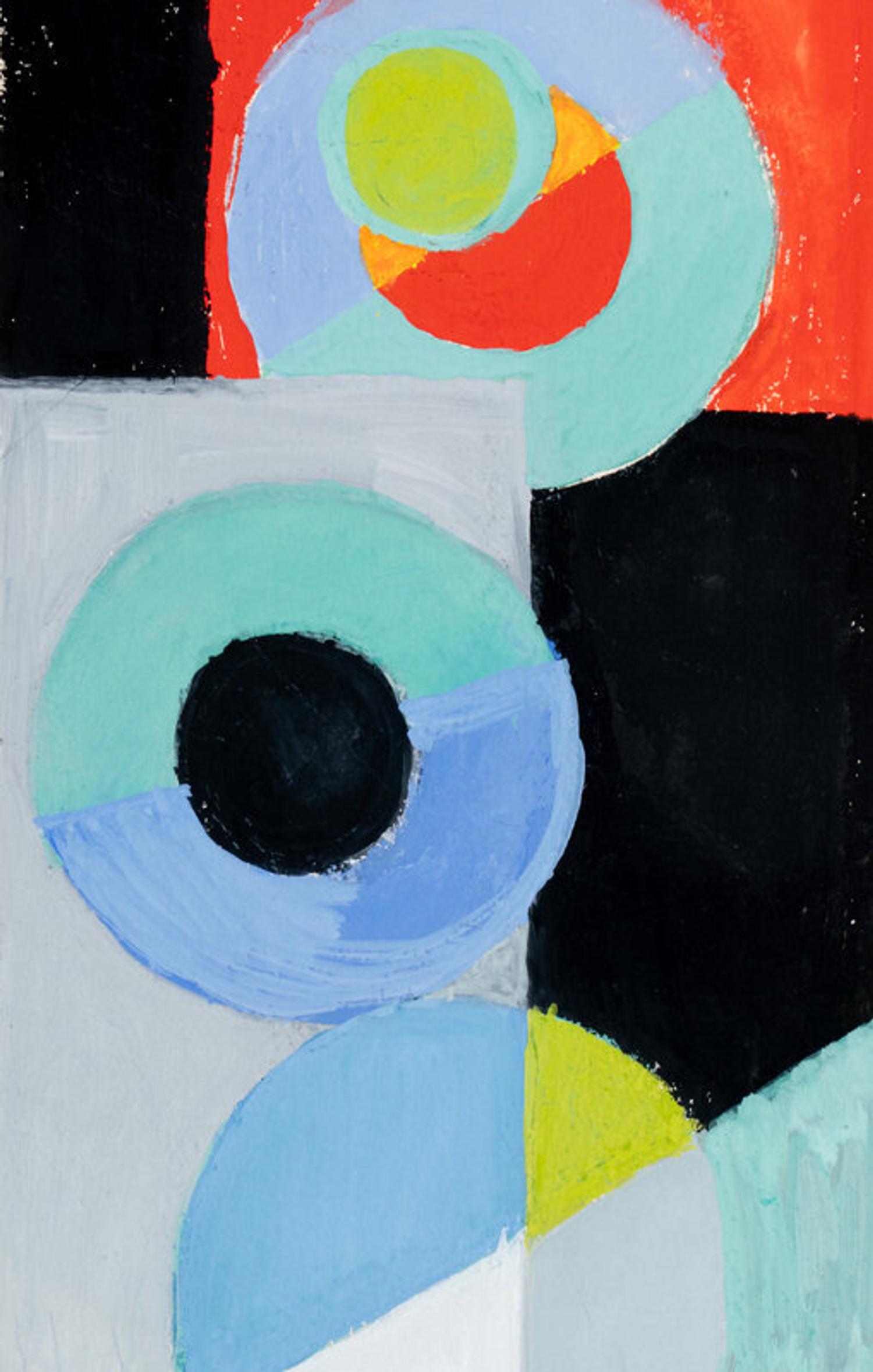
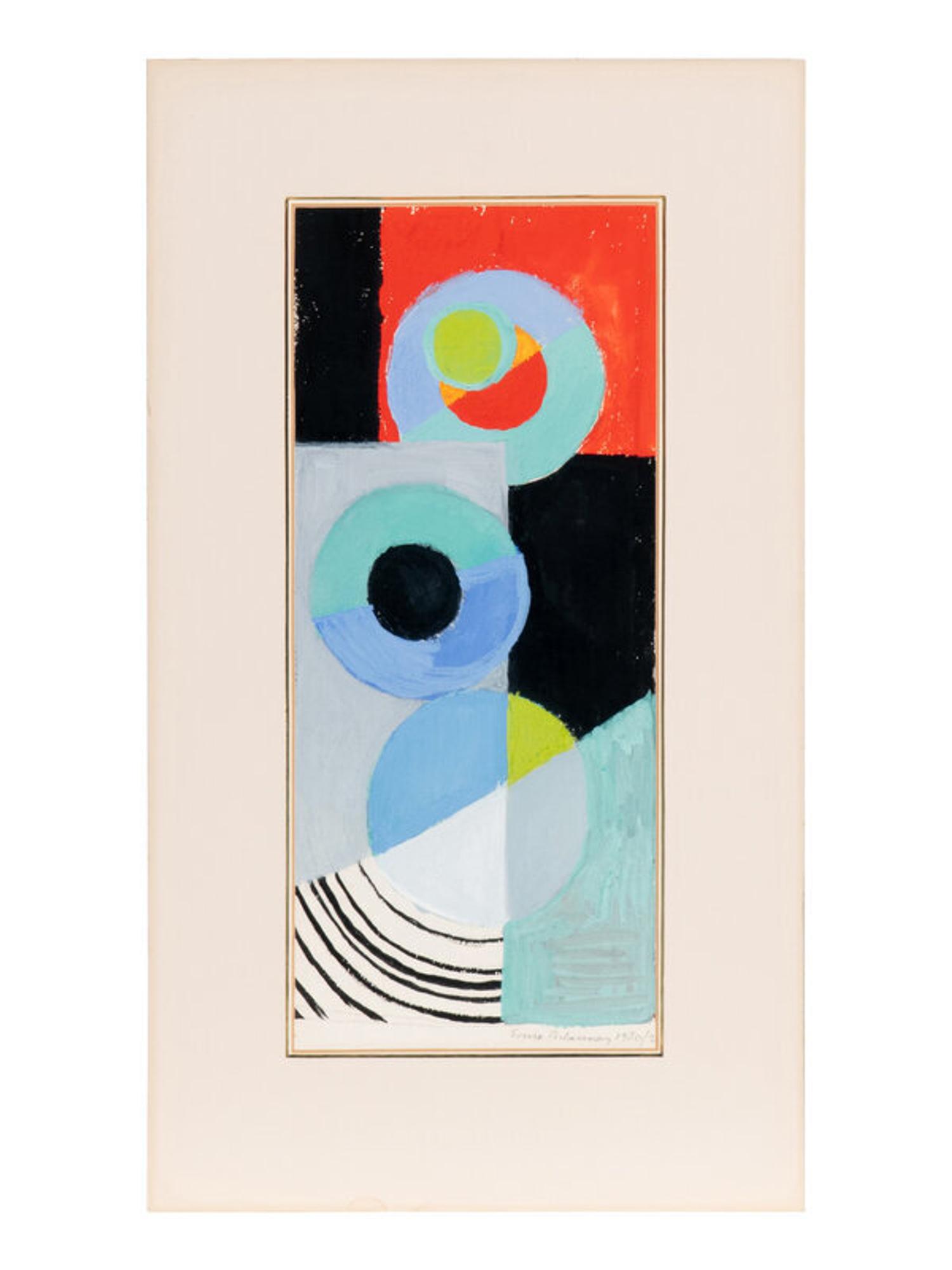
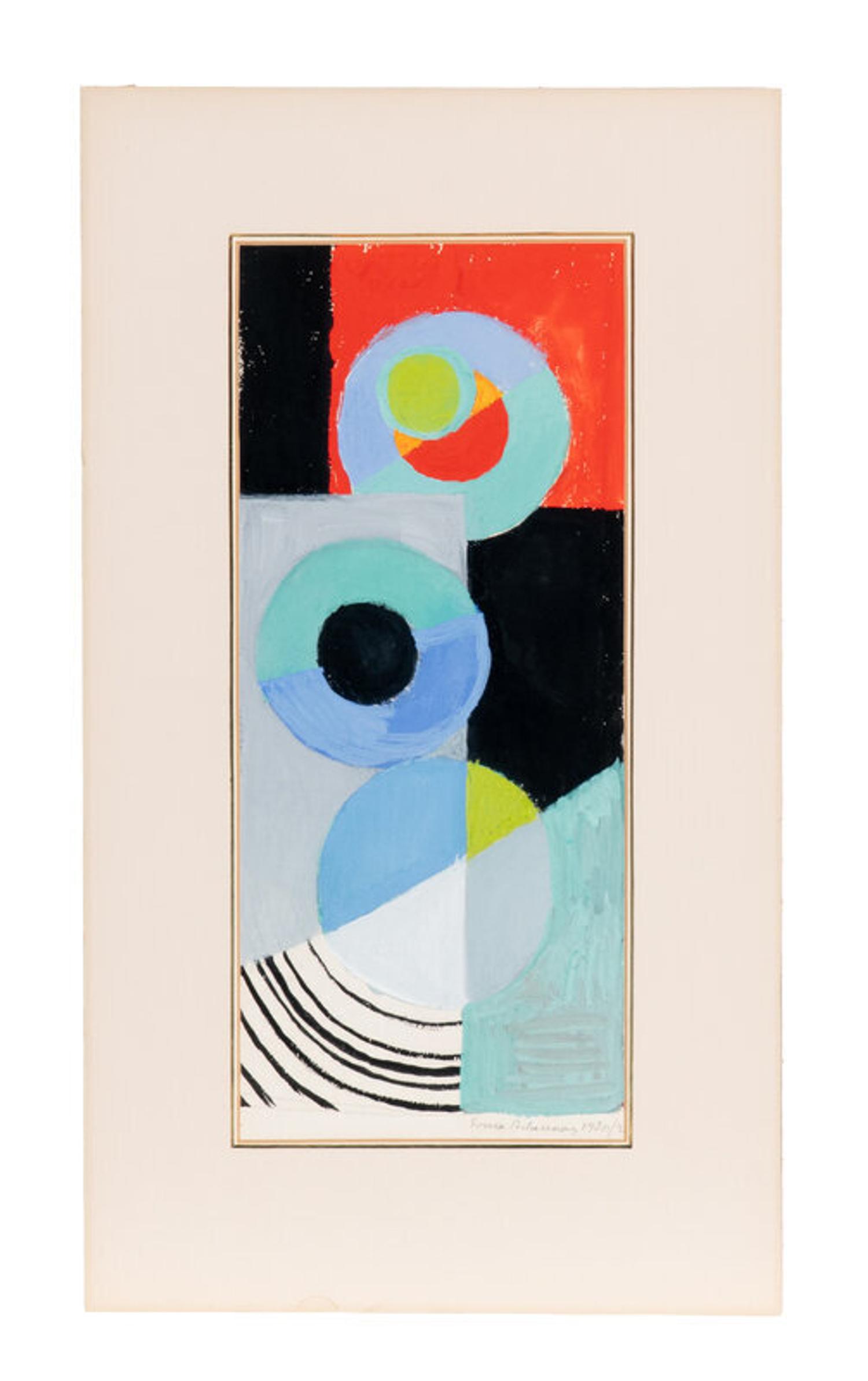
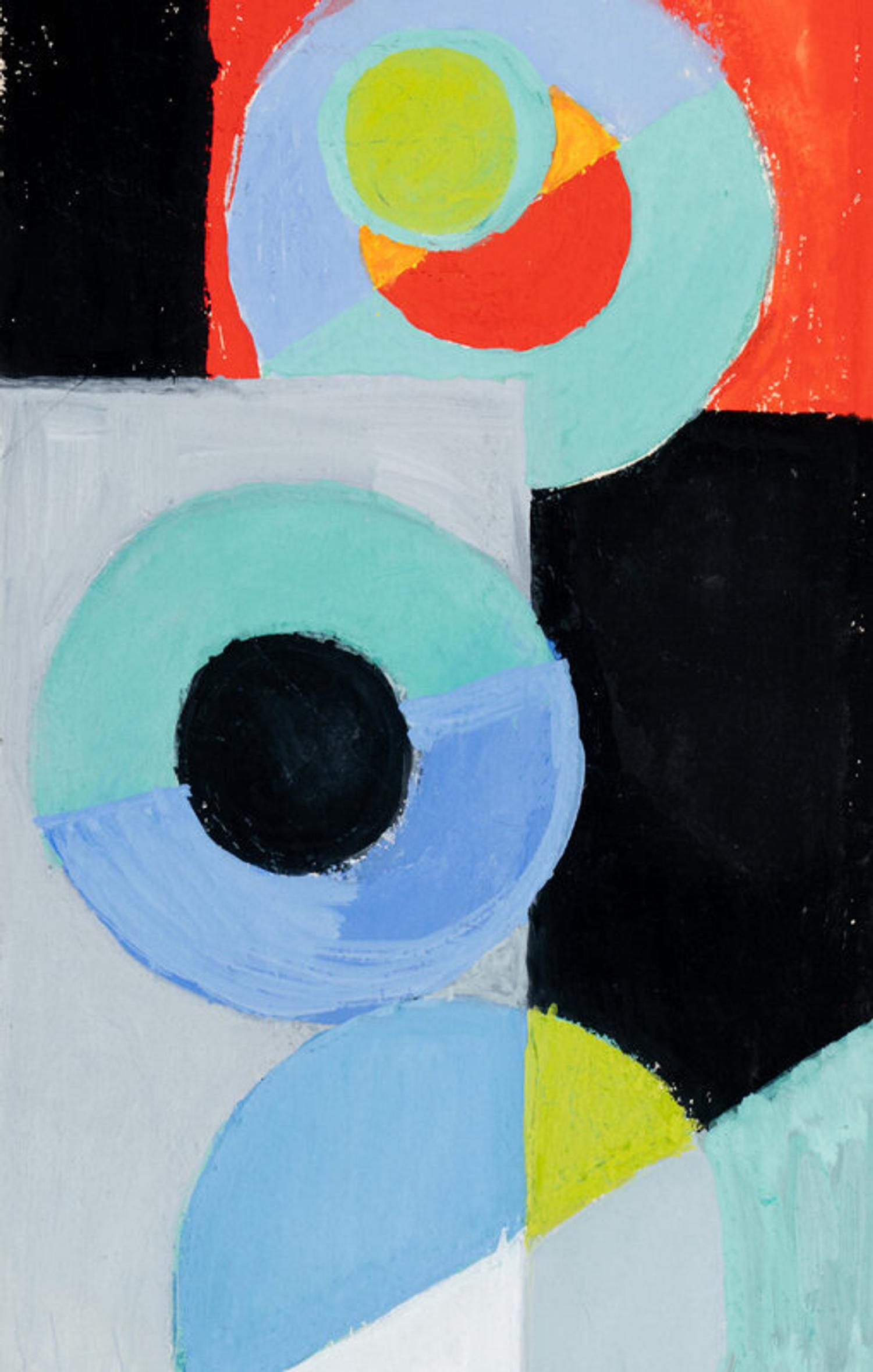
The present work, Rythme Coloré, c. 1950-52, with its strong correlation of bold and dynamic pure color forms, is a striking example of Sonia Delaunay's powerful abstraction of the 1950s. The composition appears to be a spontaneous and even impulsive act of creation, a poetic construction of pure abstract form and color. In the early years of the 20th century, Sonia and her husband, Robert Delaunay, played a key role in the Parisian avant-garde as co-developers of abstract painting in France. Together, they explored what came to be known as Simultanism, stemming from their study of Michel-Eugène Chevreul’s On the Law of the Simultaneous Contrast of Colors (1839). The treatise demonstrates the sensational optical effects achieved by placing complementary colors next to each other. In this manner, color and rhythm can create a heightened sense of emotional perception and simultaneous states of being. For the Delaunays, these were more than just compelling visual phenomena, but also an artistic method that allowed them to conjure the dynamism of modern life itself.
Sonia Delaunay described the development of her own creative career in the 1930s as a gradual process of discovery of harmonies and dissonances to give colors a life of their own, investing them with a pulse and vibrations which, when ordered, became rhythms. The titles of many of her later series of paintings, Rythme coloré and Rythme couleur, reflect this. The present gouache, with its complex play of curves and counter-curves winding around a central axis, is at once fluid and ordered. The rotational motion of the helixes and spirals suggests endless rhythm. It visually expresses Delaunay’s assertion that:
“Color, freed from its descriptive, literary use” can be “grasped as such, in its own particular richness. The subject is of no importance; it can be hinted at, or else arise out of the colored configuration itself. He who knows how to appreciate color relationships, the influence of one color on another, their contrasts and dissonances, is promised an infinitely diverse imagery. With color comes the essential structural element of rhythm, which is based on numbers. Just as in written poetry, that which counts is not the mere juxtaposition of words, but the act of creation mysteriously provoking (or not provoking) emotion; so in colors, what counts is poetry, the mysterious inner vitality - emanating and communicating. At last we have hopes of a new language” (Sonia Delaunay, quoted in J. Damase, Sonia Delaunay, Rhythms and Colours, London, 1972, pp. 275-6).